

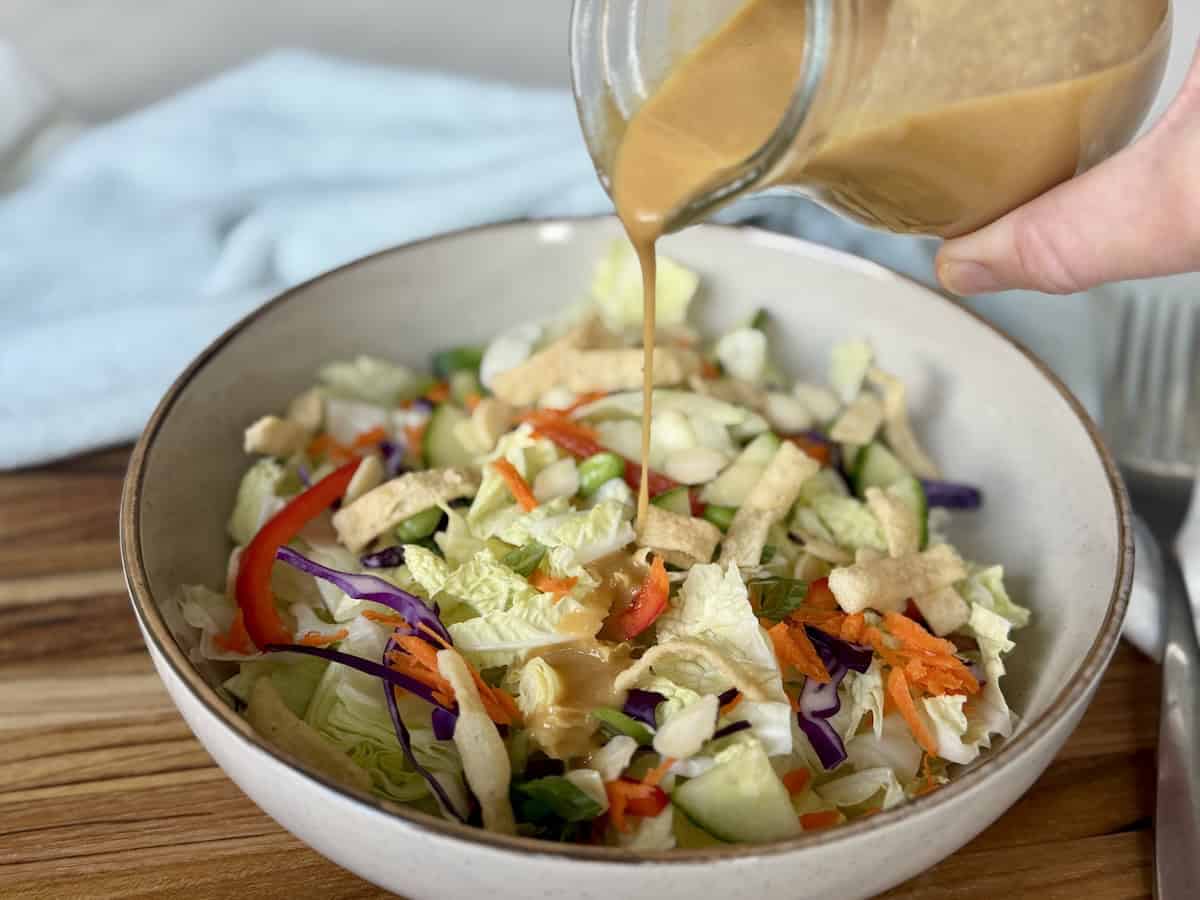
This delicious Thai peanut dressing combines layers of flavor from a few key ingredients including peanut butter, soy sauce, sesame oil and few aromatics. Then we'll blend it to get just the right consistency for a perfect homemade salad dressing.
Peanut dressing unlocks all of the flavors from your favorite Thai restaurant, but leaves the restaurant price tag at the door. So, whether you want a great dressing for your side salad or a tasty dipping sauce for chicken, I'll take you through the best ingredients and easy steps for the perfect dinner at home.
This blog post contains affiliate links. As an Amazon Associate I may earn income from qualifying purchases. We also partner with Impact.com to offer affiliate links. Thanks for the support.
About Thai Peanut Salad Dressing
Restaurant dressing can be so mysterious. When I find one that I really love, I immediately start asking questions. Then I do a deep dive until I unlock all of the flavors and figure out how to get the exact texture I'm going for.
Then, when I have a new recipe, my homemade salad dressing goes into the rotation. I make one dressing per week, and that serves at least one family dinner and a couple of my work-from-home lunches. This recipe has 8 simple ingredients that pack an incredible punch of bright flavor. And I dare say it's better than a restaurant too.
Why This Recipe Works
The magic here isn't complicated; it's all about ratios. The peanut butter adds a subtle peanut flavor, but its also the perfect way to add a thicker element to the dressing. My favorite thing about this dressing is that it gently coats my lettuce and other salad ingredients without weighing them down. Aside from that, the combination of sesame oil, garlic, and ginger bring together the best flavor combination I could ask for in a simple salad dressing.
Simple Ingredients you already have
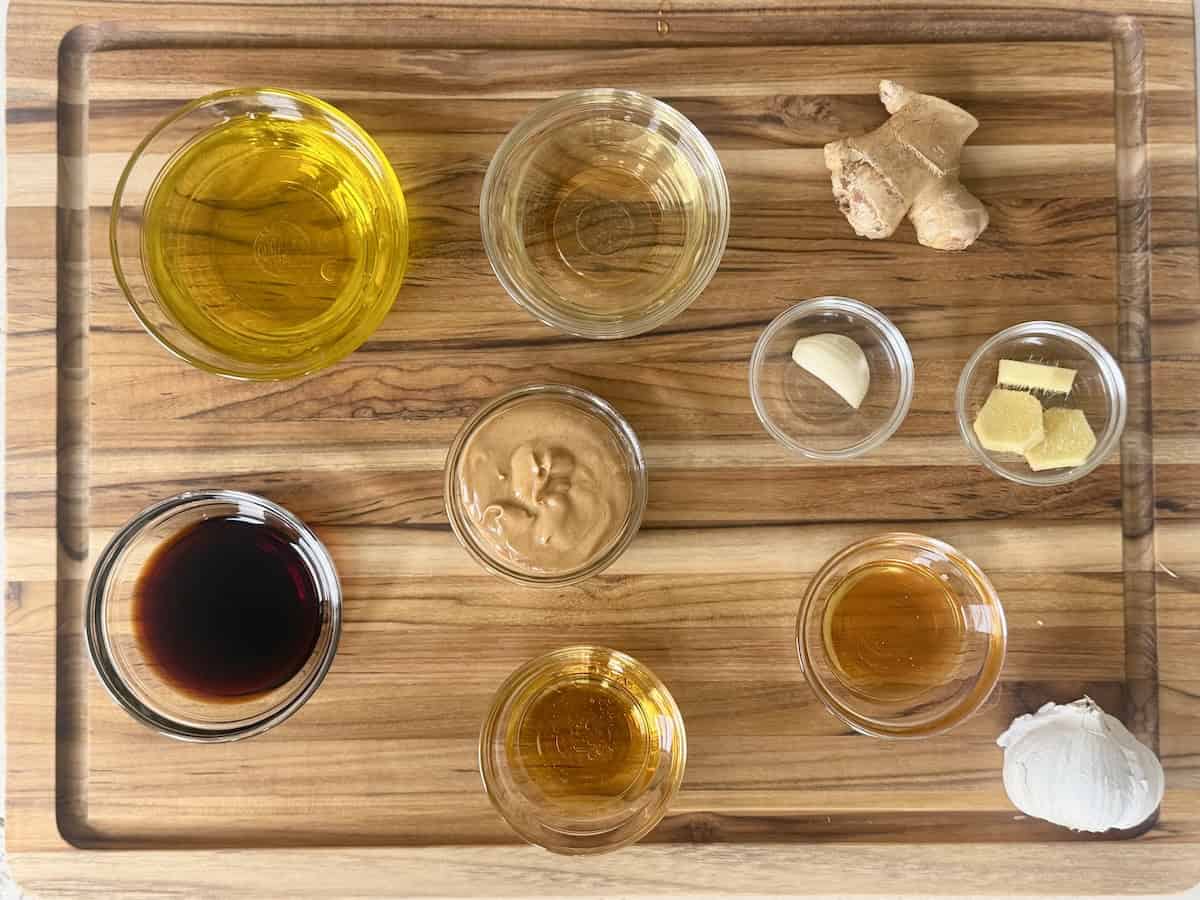
Most of these ingredients live in standard grocery stores. If you're hunting for toasted sesame oil and it's not in the oil aisle, check near the soy sauce or in the international section. Fresh ginger is usually near the garlic in the produce section. Look for firm, smooth skin with no wrinkles or soft spots.
- ¼ cup Creamy Peanut Butter
- ½ cup Olive Oil
- ¼ cup Rice Wine Vinegar
- 2 tablespoon Soy Sauce
- 1 tablespoon Honey
- 1 tablespoon Toasted Sesame Oil
- 1 clove of Garlic
- 2 teaspoon or 1" fresh Ginger
- pinch of Red Pepper flakes or a dash of Sriracha is optional
You can and should make adjustments based on personal preferences. I suggest you start with a small clove of garlic and taste test the dressing to see if you want more. The garlic will add a little kick which I really love, but it can be strong for some people. Also, you can add more soy sauce or a pinch of salt if you want. This recipe is written to be very "middle of the road," and make everyone happy.
Helpful Supplies for Homemade Dressing
- Smoothie Blender- the easiest way to make a completely smooth dressing.
- Microplane or fine grater – if you don't have a smoothie blender, this is the next best option for a smooth dressing. Use a microplane to grate the ginger and garlic into a paste.
- Measuring cups and spoons – Accuracy matters here. Eyeballing the peanut butter or soy sauce can throw off the balance fast.
- Airtight jar or container – For storage. A mason jar works great and makes it easy to shake before each use.
Step-by-Step Instructions
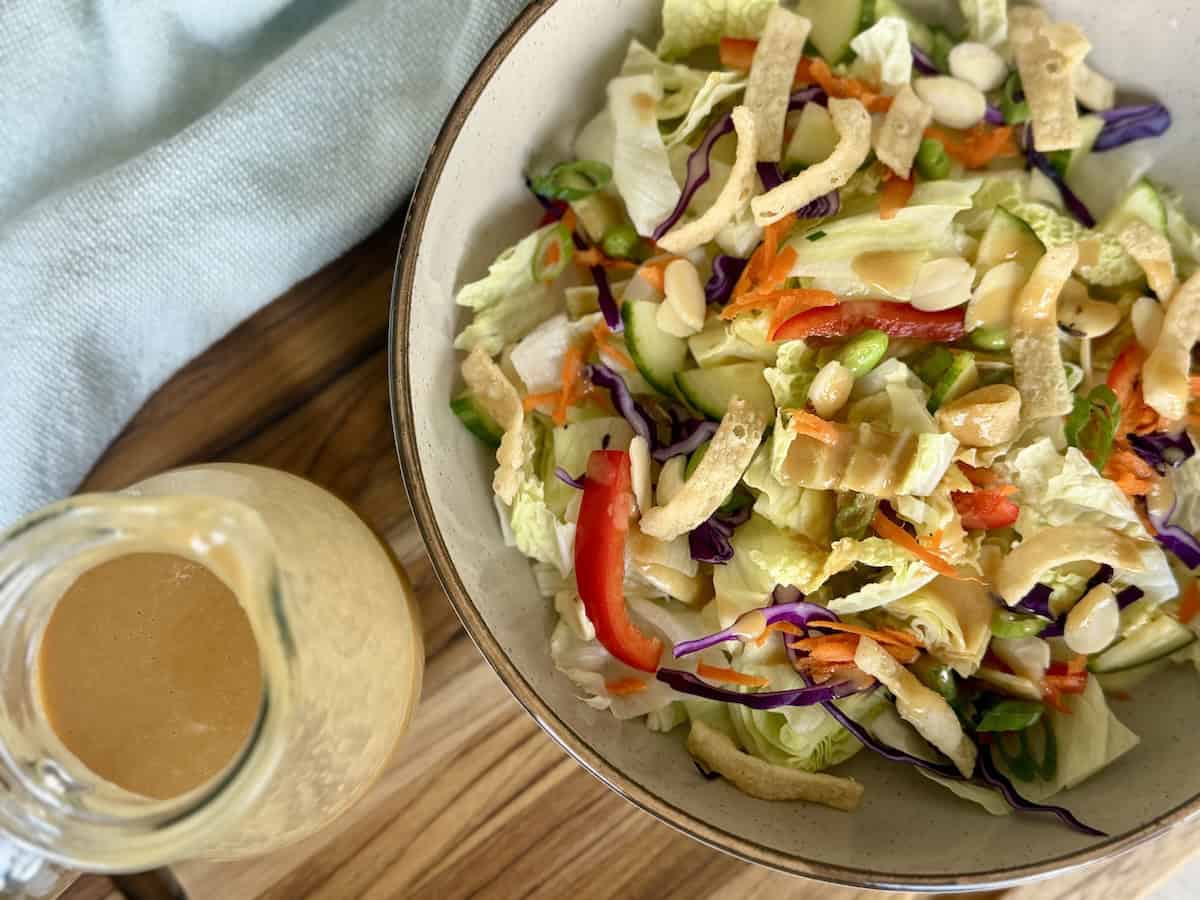
This dressing comes together faster than you might think. Just measure and blend. You can also make it in advance so the flavors have time to come together and settle down.
- Measure all of the ingredients and add them to a smoothie blender. A high speed blender really saves time and energy.
- Blend the dressing for 30-60 seconds.
- Check the dressing for thickness. You can add 1-3 teaspoons of warm water if needed to reach your desired consistency. You want the dressing to be thin enough to pour, but thick enough to hold on to your lettuce.
- Taste and adjust. This is the step most people skip, and it's the most important one. Need more tang? Add more rice vinegar. Want it saltier? A splash more soy sauce.
- Add heat if you want it. Stir in red pepper flakes or a drizzle of sriracha sauce. Start with less than you think you need. Heat builds as the dressing sits.
- Transfer to a jar. Pour the dressing into an airtight container. It will thicken slightly as it sits in the fridge, so if it looks a little loose right now, that's fine. It'll tighten up.
The dressing is ready to use immediately, but it tastes even better after an hour in the fridge when all the flavors have had time to get friendly. Just give it a good shake or stir before using since the oils can separate.
Fresh Ingredients for a Great Thai Salad
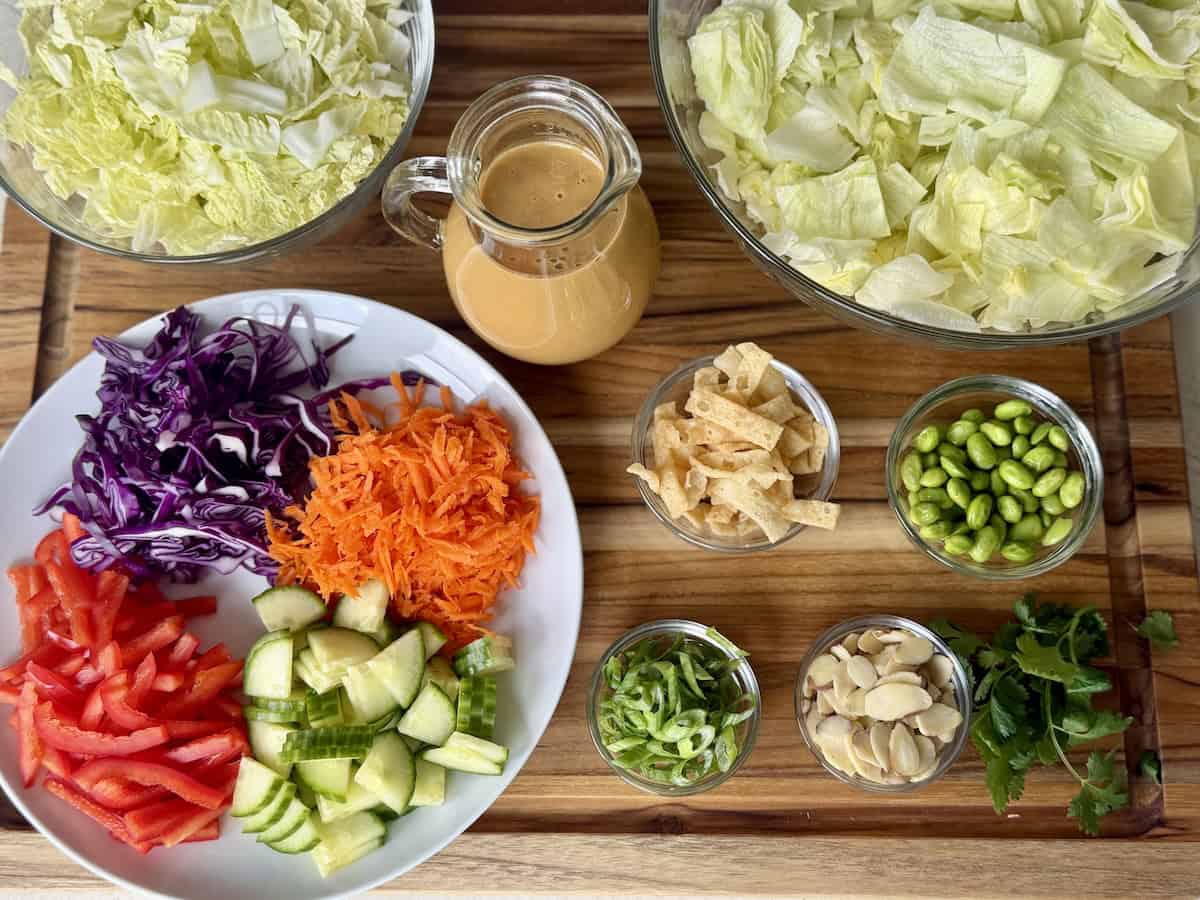
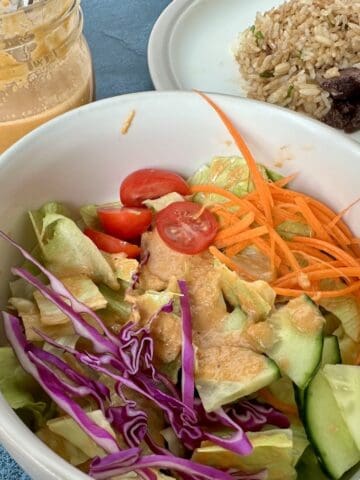
Now that you have this amazing dressing recipe in your pocket, let's talk about the fresh veggies and make the perfect salad. This can be served as a side dish, or you can add a protein like Thai chicken skewers to make it a meal.
- Lettuce greens- Napa cabbage is a popular restaurant option, but romaine lettuce or even iceberg totally hold up with this salad.
- Thinly sliced red bell pepper
- Thinly sliced red cabbage
- Shredded carrots
- Shelled edamame
- Crispy Wontons for the crouton element
- Garnish with fresh cilantro or sliced green onions to pull it all together and feel fancy
Want to make it a quick and easy meal? Add 4 ounces of shredded rotisserie chicken per person to the salad and you have a perfect meal.
Tips For the Perfect Dressing
The difference between good and great is in the details. Here are just a few little notes worth looking at.
Always start with room-temperature peanut butter. Cold peanut butter straight from the fridge is a nightmare to blend. Let it sit out for 10 minutes before you start, or microwave it for 10 seconds to take the chill off.
Use a smoothie blender or microplane for the garlic and ginger. A smoothie blender is my favorite way to combine everything in one step, but if you don't have one, use a microplane for the garlic and ginger. Grated ginger and garlic integrate into the dressing and disappear. Minced pieces float around and give you random bursts of sharp flavor instead of a smooth, even taste.
Taste as you go. The balance of salty, sweet, tangy, and nutty is different for everyone. Adjust while you're making it instead of trying to fix it later when it's already on your salad.
Thin it out before serving if needed. The dressing thickens in the fridge. Before you use it, add a teaspoon of warm water and stir until it's pourable again. You want it to coat the back of a spoon, not cling like paste.
What to Serve This With
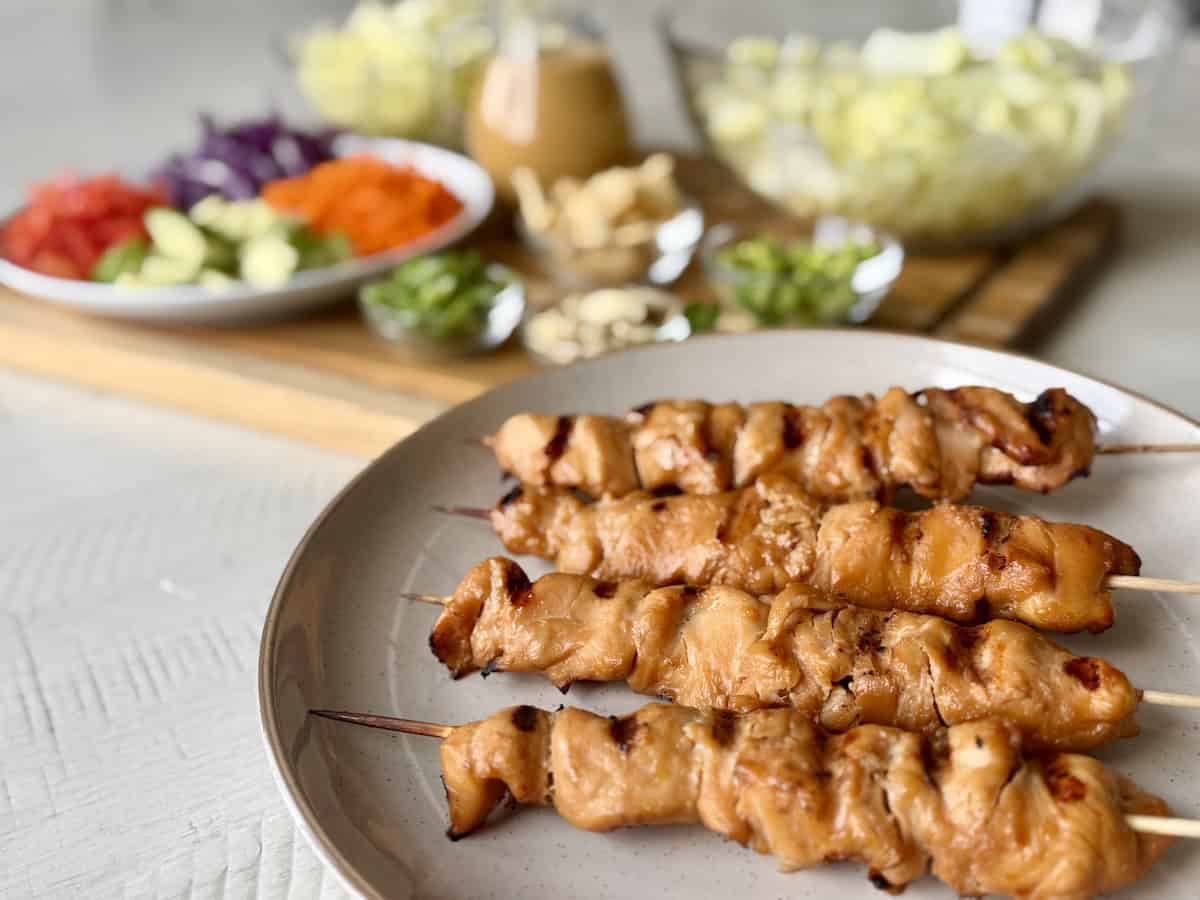
This dressing is incredibly versatile, which is both a blessing and a curse because you'll want to put it on everything.
It's perfect over shredded cabbage and carrot slaw, especially with fresh cilantro and chopped peanuts on top. Toss it with cold rice noodles, cucumbers, and shredded chicken for a no-cook dinner that feels like takeout. Drizzle it over roasted sweet potatoes or charred broccoli to make vegetables feel like the main event.
My favorite way to serve it is with my Thai Chicken Skewers, but my son loves it with grilled shrimp. The dressing does the heavy lifting, so the rest of your plate can stay simple.
Storage Instructions
This dressing keeps beautifully, which is rare for something with fresh garlic and ginger. Store it in an airtight container in the fridge for up to two weeks. The oils will separate as it sits, so give it a good shake or stir before each use. If it thickens too much, add a teaspoon of warm water and whisk until it loosens back up.
Don't freeze it. The texture breaks down when it thaws, and you'll end up with a grainy, separated mess that no amount of whisking will fix. If you notice any off smells or the color starts to darken significantly, toss it.
The best part is you can make it in the time it takes to decide what to order for dinner, and it'll last you through the week. Keep a jar in your fridge and suddenly every meal feels a little more put together.
Recipe Modifications
Here are a few simple swaps that you can make if you want to try something different or don't have all of the ingredients on hand:
Fresh lime juice or white wine vinegar are great substitutions for the rice vinegar. It still adds a bright zing to cut through the weight and saltiness of the dressing.
Subscribe for recipes straight to your inbox
Homemade Thai Peanut Dressing Recipe Card
Thai Peanut Dressing Recipe That Beats Takeout
Equipment
- 1 smoothie blender
- Measuring Spoons
- measuring cups
Ingredients
- ½ cup Olive Oil or neutral flavored oil that you like
- ¼ cup Creamy Peanut Butter
- ¼ cup Rice Wine Vinegar
- 2 tablespoon Soy Sauce
- 1 tablespoon Honey
- 1 tablespoon Toasted Sesame Oil
- 1 clove Garlic small to medium
- 2 teaspoon Fresh Ginger about 1"
- pinch of Red Pepper flakes or a dash of Sriracha is optional

Instructions
- Measure all of the ingredients and add them to a smoothie blender.
- Blend the dressing for 30-60 seconds.
- Check the dressing for thickness. You can add 1-3 teaspoons of warm water if needed to reach your desired consistency. You want the dressing to be thin enough to pour, but thick enough to hold on to your lettuce.
- Taste and adjust. This is the step most people skip, and it's the most important one.
- Transfer to a jar. Pour the dressing into an airtight container. It will thicken slightly as it sits in the fridge, so if it looks a little loose right now, that's fine. It'll tighten up.
Nutrition
Did you make this recipe? Tag me on Instagram @fancy_apron 🙂 or leave a comment below.

Leave a Reply